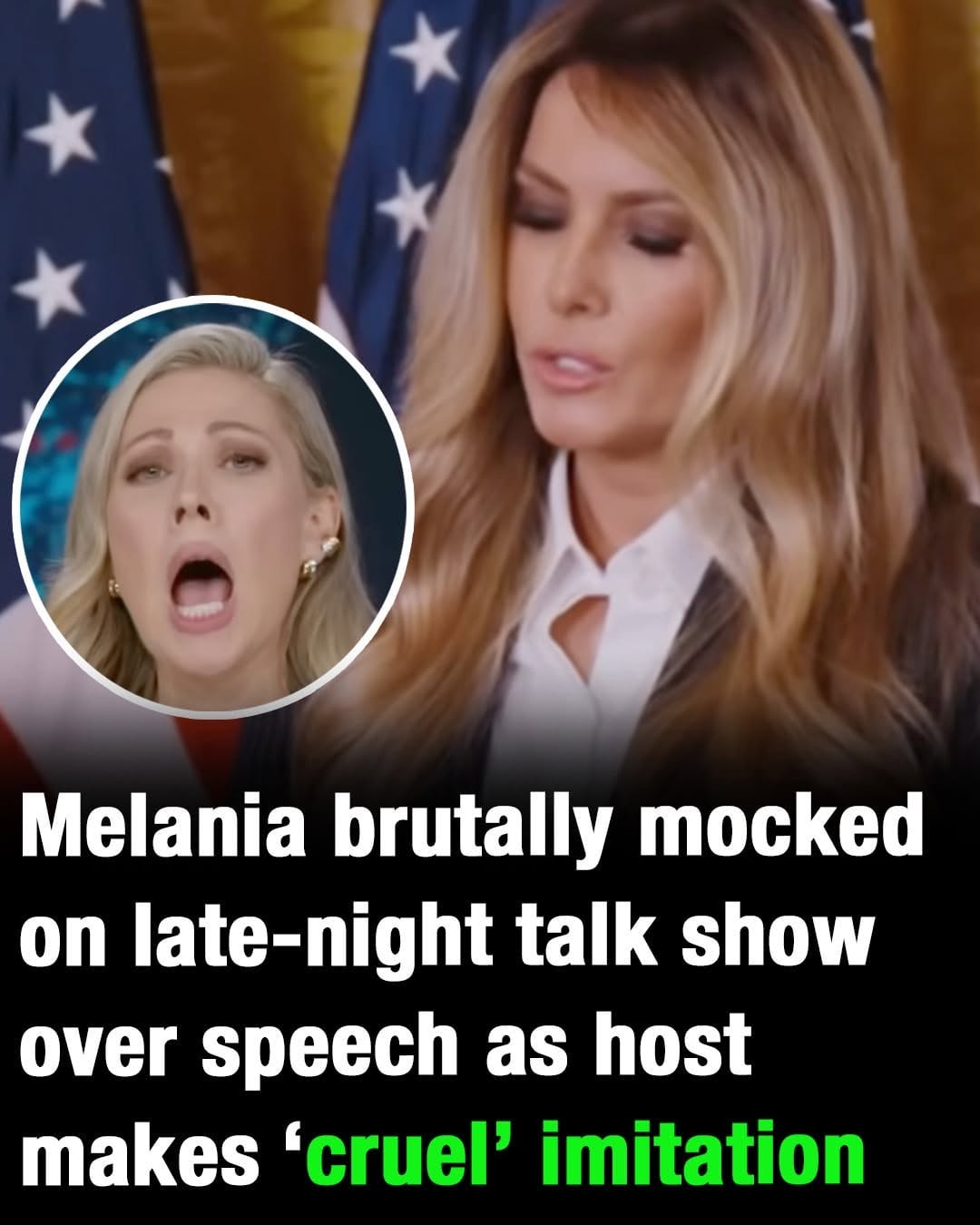
Melania Trump walked onstage to praise America’s brightest young minds. Minutes later, late-night TV turned her words into a punchline. In a single segment, a celebration of innovation became a viral mockery of her voice, her accent, even her sincerity. As The Daily Show host Desi Lydic mimicked her like a glitching chatbot, the line between fair satire and personal attack… >
Melania Trump’s AI speech was meant to spotlight students and a fast-changing future, but it quickly became raw material for late-night comedy. Desi Lydic’s impression didn’t just mock the lofty metaphors; it framed Melania herself as something artificial, a kind of human avatar reading prompts she barely owns. For some viewers, that was sharp political satire. For others, it crossed into ridiculing her accent and persona more than her ideas.
Beneath the jokes lies a deeper discomfort. AI now shapes medicine, war, and culture, and yet public debate keeps collapsing into personality drama. Melania spoke in grand, almost sci‑fi language about robots in surgery and drones in combat, and instead of wrestling with those stakes, the conversation shifted to whether she “sounds like ChatGPT.” The real question isn’t how she sounded, but who gets to define the future she was trying, awkwardly or not, to describe.