The Last Twenty Dollars on Willow Street
The chill of late November had a way of slipping into every weak corner of a town like Millhaven, Ohio.
It crept through cracked windows, slid beneath worn doors, and settled deep into the bones of people who had already carried too much for too long. On Willow Street, where buildings leaned with age and sidewalks were beginning to break apart at the edges, Walter Hensley sat alone on a bench outside Mason’s Grill, keeping his gloved hand pressed over the inside pocket of his coat. There was a single twenty-dollar bill tucked there.

It was the last money he had until his pension check arrived.
At eighty years old, Walter understood exactly what that meant. It meant the coming days wouldn’t be easy. It meant stretching canned soup, drinking more coffee than he should, and convincing himself hunger was only temporary. He had endured harder things in his life. He had lived through layoffs, long hospital waits, the loss of his wife, and the quiet realization that some people only stayed close while there was still something left to take.
Even so, the twenty felt warm against his chest, as if even it knew how much it mattered.
He had been sitting there after leaving the bank, trying to decide whether to buy groceries now or wait until morning, when he noticed the biker standing near the diner window.
The man was tall and broad-shouldered, wearing a weathered leather vest over a black hoodie, heavy boots, and the kind of expression that made most people look away too quickly. His beard was streaked with gray, and his face carried the rough lines of a life spent outdoors, on the road, or in places where no one wasted time pretending to be gentle. But Walter noticed something else.
He saw the way the man looked at the plate of food through the glass—and then turned away.
He saw the tension in his posture, the way pride kept him upright even as exhaustion pulled him down.
Walter had seen that kind of hunger before.
Once in the mirror.
Once in his wife Clara’s eyes when she thought he was asleep and didn’t know how they would pay another bill.
And more recently, in the quiet, humbling days after his daughter began “helping” with his finances and his money started disappearing faster each month.
He could have ignored it. Most people did. Life had become very good at teaching strangers not to see each other.
But Walter had never fully learned that lesson.
He pushed himself up from the bench with a soft groan in his knees and crossed the sidewalk slowly, his cane tapping once with every step.
The biker turned immediately, alert like someone used to trouble arriving before kindness.
“Can I help you, sir?” he asked.
Walter reached into his coat and pulled out the folded bill.
“Maybe,” he said. “You look like you need this more than I do.”
For a moment, the man simply stared.
The wind moved between them. A pickup truck passed. Somewhere down the block, a dog barked once and then fell silent. But the moment itself seemed to pause.
“No,” the biker said at last, his voice low and rough. “I can’t take that.”
Walter lifted the bill slightly higher.
“Yes, you can.”
“Sir, keep it.”
Walter gave him a tired but steady smile.
“I’m old, not blind. I know the difference between a man passing time and a man standing still because his stomach is empty.”
Something shifted in the biker’s face. It was quick, but Walter caught it—surprise, shame, maybe even pain.
The man still didn’t move, so Walter did what older people sometimes do when they’ve already made up their minds and see no reason to waste another moment. He took the biker’s hand, placed the twenty into his palm, and gently folded his fingers over it.
“Go get yourself a meal,” he said softly.
The biker opened his mouth as if to argue again, but no words came.
Walter nodded once and turned back toward the bench.
By the time he sat down, the weight of what he had done settled over him. The money was gone. The week had just become harder. He would have to manage. But beneath the worry was something stronger than fear.
He had lost many things.
He had not lost the part of himself that still recognized another person’s need.
Across the sidewalk, the biker remained standing, staring down at the wrinkled bill in his hand as if it carried more weight than paper should.
A Meal That Was Never Meant to Be Kept
The biker’s name was Reed Calloway, though most people in his motorcycle club called him Stone. In fifty-two years, he had been called many things, and most of them hadn’t been kind. He was used to people stepping aside, whispering after he passed, or judging him before he even spoke.
What he wasn’t used to was sacrifice.
He knew that twenty dollars hadn’t come from comfort. He could tell by how carefully it had been folded, by the coat Walter wore that had seen too many winters, by the way the old man walked with pride instead of ease. Reed understood hardship. He understood the look of an almost empty pantry, the careful timing of bills, the way older people often tried to hide need behind neat collars and polite voices.
He went inside Mason’s Grill and sat at the counter.
The waitress gave him the cautious smile people used when they hoped nothing unpleasant would happen.
“What can I get you?”
Reed glanced at the menu, though he already knew he’d choose the cheapest option.
“Turkey plate,” he said. “And coffee.”
When the meal arrived, steam rising from mashed potatoes and green beans, his stomach tightened so sharply it almost made him lightheaded. He had been living on vending machine snacks and gas station coffee since his bike repair drained the last of his cash that morning. He should have eaten immediately.
Instead, he looked back through the window.
Walter was still on the bench, sitting with the patience of someone who had nowhere warm waiting for him. Reed thought about his own father then—a proud man who had worn silence like armor until the end. There had once been time to make things right with him.
There hadn’t been.
He pushed the plate away untouched.
The waitress frowned. “Everything all right?”
Reed pulled out the twenty, added the change from his pocket, and slid it toward her.
“Can you box this up? And make another coffee to go.”
She blinked. “You’re not eating?”
Reed looked out the window again.
“Not by myself.”
He took the boxed meal and coffee outside.
The bench was empty.
For the first time in a very long while, Reed felt a sharp urgency he didn’t quite understand. He looked up and down the street, then asked the paper vendor on the corner if he had seen the old man with the cane.
The man pointed vaguely toward the older buildings off Willow Street.
That was enough for Reed.
He spent nearly three hours finding the right apartment.
What started with one boxed meal grew into something bigger with every stop. He bought bread, eggs, soup, apples, potatoes, and a roasted chicken after one of his club brothers agreed to lend him money until the weekend. Then he passed a hardware store and walked out with weather stripping, lightbulbs, and a small electric heater.
It still didn’t feel like enough.
But it was a beginning.
Apartment 4C
Walter opened the door to Apartment 4C cautiously—then with surprise.An 80-year-old man with almost nothing left gave his final $20 to a hungry biker outside a quiet diner — and that small, silent act brought an entire community to his door
The Last Twenty Dollars on Willow Street
Late November cold had a way of slipping into every weakness in a town like Millhaven, Ohio. It crept through cracked panes, slid beneath worn doors, and settled deep into the bones of people already carrying more than their share. On Willow Street, where buildings leaned with age and sidewalks crumbled at the edges, Walter Hensley sat alone on a bench outside Mason’s Grill, his gloved hand resting over the inside pocket of his coat. Inside was a single folded twenty-dollar bill.
It was all the money he had left until his pension arrived.
At eighty, Walter understood exactly what that meant. The coming days would be uncomfortable. It meant stretching canned soup, drinking more coffee than he should, and pretending hunger was just a passing feeling. He had endured worse in life. Layoffs. Hospital corridors. Losing his wife. And the slow realization that some people stayed close only while there was something left to take.
Still, that twenty felt warm against his chest, as if even it knew how important it was.
He had been sitting there after leaving the bank, debating whether to buy groceries now or wait until morning, when he noticed a biker standing near the diner window.
The man was tall and broad-shouldered, dressed in a worn leather vest over a black hoodie, heavy boots planted firmly, wearing the kind of expression that made most people look away too quickly. Gray touched his beard, and his face carried the rough marks of a life spent outdoors, on the road, or in places where softness didn’t survive long. But Walter saw something more.

He noticed how the man looked at a plate of food through the glass—then turned away.
He saw the stiffness in his posture, pride keeping him upright even as exhaustion pulled him down.
Walter had seen that kind of hunger before.
In the mirror once.
In his wife Clara’s eyes when she thought he was asleep, unsure how they’d pay the next bill.
And recently, in the quiet, humiliating days after his daughter began “helping” with his finances and his money seemed to disappear faster each month.
He could have ignored it. Most people would have. Life had trained strangers not to see each other.
But Walter had never learned that lesson.
He pushed himself up from the bench with a soft groan, crossed the sidewalk slowly, his cane tapping with each step.
The biker turned immediately, alert the way someone becomes when trouble usually arrives before kindness.
“Can I help you, sir?” he asked.
Walter reached into his coat and pulled out the folded bill.
“Maybe,” he said. “You look like you need this more than I do.”
For a moment, the man simply stared.
The wind passed between them. A pickup rolled by. Somewhere, a dog barked once and fell silent. Yet the moment itself seemed frozen.
“No,” the biker said finally, voice low and rough. “I can’t take that.”
Walter raised the bill slightly.
“Yes, you can.”
“Sir, keep it.”
Walter offered a tired but steady smile.
“I’m old, not blind. I know the difference between a man passing time and a man standing still because his stomach is empty.”
Something shifted in the biker’s expression—quick but clear. Surprise. Shame. Maybe even hurt.
When the man still didn’t move, Walter did what older people sometimes do when they’ve already decided. He took the biker’s hand, placed the bill into it, and gently closed his fingers around it.
“Go get yourself a meal,” he said softly.
The biker opened his mouth to argue again, but nothing came out.
Walter nodded once and returned to his bench.
By the time he sat down, the weight of what he’d done settled in. The money was gone. The week had just gotten harder. He would have to manage. But beneath the worry was something stronger than fear.
He had lost many things.
But not the part of himself that recognized another person’s need.
Across the street, the biker remained standing, staring at the wrinkled bill as if it carried far more than its value.
A Meal That Was Never Meant to Be Kept
The biker’s name was Reed Calloway, though most in his motorcycle club called him Stone. Over fifty-two years, he’d been called many things—few of them kind. He was used to people stepping aside, whispering behind him, judging him before he spoke.
What he wasn’t used to was sacrifice.
He knew that twenty hadn’t come easily. He could see it in how it was folded, in Walter’s worn coat, in the way the old man walked with dignity rather than comfort. Reed understood hardship—the nearly empty pantry, the careful timing of bills, the way older people masked need behind neat collars and polite voices.
He stepped into Mason’s Grill and sat at the counter.
The waitress gave him the cautious smile people used when hoping nothing would go wrong.
“What can I get you?”
Reed glanced at the menu, though he already knew.
“Turkey plate,” he said. “And coffee.”
When the meal arrived, steam rising from mashed potatoes and green beans, his stomach tightened so sharply it almost made him dizzy. He’d been surviving on vending snacks and gas station coffee since his bike repair drained his last cash that morning. He should have eaten immediately.
Instead, he looked out the window.
Walter was still on the bench, sitting with the patience of someone with nowhere warm to go. Reed thought of his own father—a proud man who wore silence like armor until the end. He had once believed there would always be time to make things right.
There hadn’t been.
He pushed the plate away untouched.
The waitress frowned. “Everything all right?”
Reed placed the twenty on the counter, added his spare change, and slid it toward her.
“Can you box this up? And make another coffee to go.”
She blinked. “You’re not eating?”
Reed looked back outside.
“Not by myself.”
He took the boxed meal and coffee outside.
The bench was empty.
For the first time in a long while, Reed felt urgency he didn’t quite understand. He scanned the street, then asked a paper vendor if he’d seen the old man with the cane.
The vendor pointed vaguely toward the older buildings nearby.
That was enough.
Reed spent nearly three hours finding the right apartment.
What began as one boxed meal grew with every stop. He bought bread, eggs, soup, apples, potatoes, and a roasted chicken after borrowing money from a club brother. Then he passed a hardware store and left with weather stripping, bulbs, and a small heater.
It still didn’t feel like enough.
But it was a start.
Apartment 4C
Walter opened the door carefully, then froze in surprise.
“You found me.”
Reed lifted the grocery bags slightly.
“You gave a stranger your last twenty bucks. Felt wrong to let that story end on a sidewalk.”
Walter looked from Reed’s face to the bags, then to the boxed meal.
“You tracked me down over one meal?”
Reed shook his head.
“Not the meal. What it cost you.”
Walter studied him, then stepped aside.
“Come in.”
The apartment was clean but stripped down to necessity. One chair. A small table. An aging heater. Bare cupboards. No clutter. No comfort. Just survival.
Reed set the groceries down and unpacked them—bread, soup, eggs, fruit, chicken, coffee. Walter watched quietly, guarded, as if hope itself had become something risky.
“You didn’t have to do all this,” he said.
Reed glanced up.
“Yeah,” he said. “I did.”
Walter nodded toward the boxed food.
“And that?”
“That’s the dinner your twenty bought.”
A faint softness crossed Walter’s face.
“Well,” he said, “you’d better eat it before it gets cold. My Clara would never forgive me if I let food sit without serving it.”
They shared the meal with mismatched forks.
The silence between them wasn’t uncomfortable. It was the kind that came when something important had already been understood.
Reed noticed a draft moving the curtain.
“That heater doing its job?”
Walter gave a quiet snort.
“It makes noise. Not sure that counts.”
Reed pulled out his phone.
Walter narrowed his eyes.
“I don’t like that look. It usually means trouble or generosity, and I’m not ready for either.”
Reed dialed anyway.
“Bring tools… and groceries. Willow Street, Apartment 4C.”
Walter pointed his fork.
“Absolutely not.”
Reed remained calm.
“Too late.”
When the Street Filled with Engines
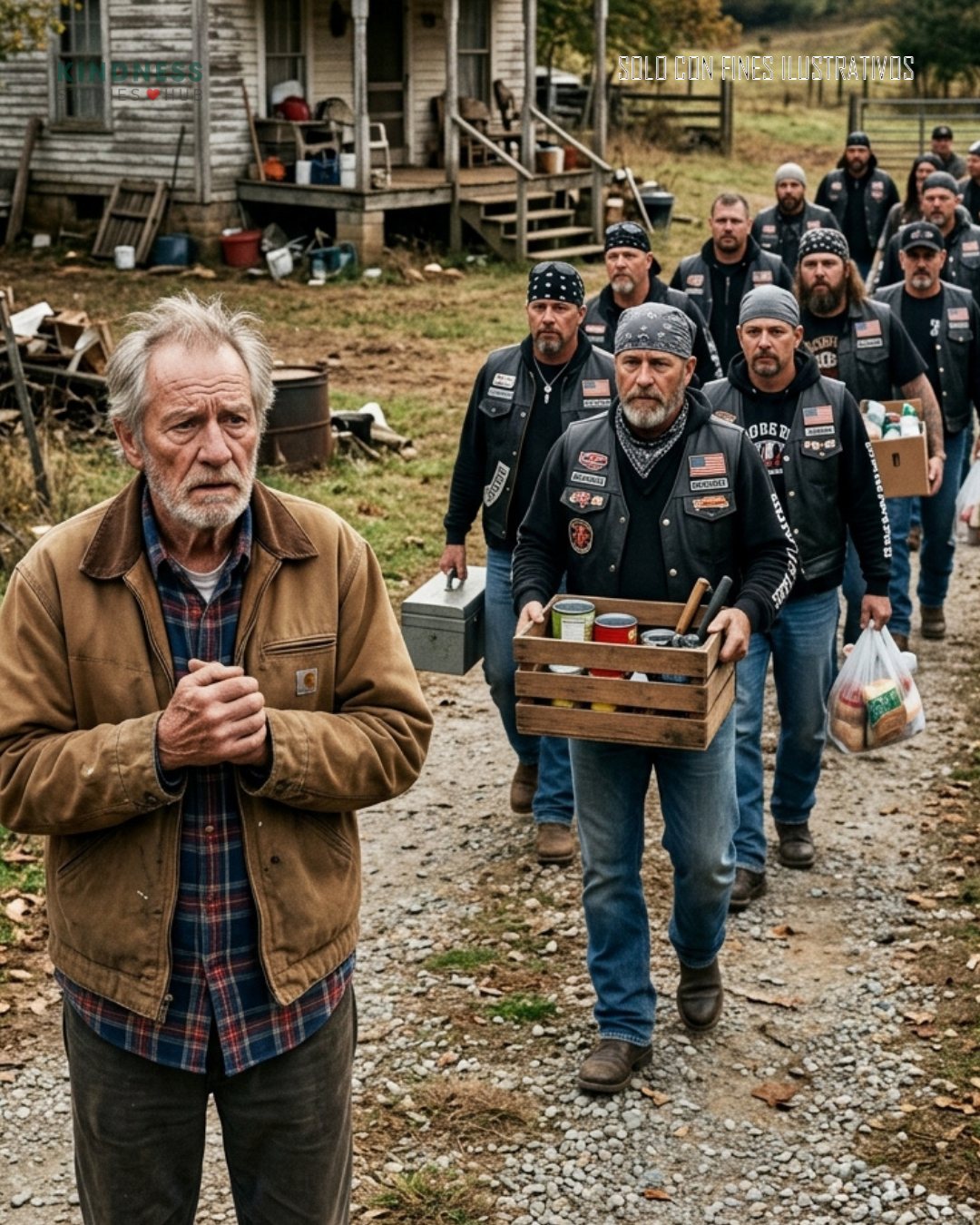
Within an hour, Willow Street transformed.
One motorcycle arrived. Then another. Then several more. Neighbors peeked out. A door cracked open across the hall. Children stared from the sidewalk.
Walter stood at the window, gripping his cane.
“Good heavens,” he murmured.
Reed shrugged. “They look louder than they are.”
A dark-haired woman entered first, carrying groceries and a toolbox.
“You rob a supermarket?” she asked Reed.
Then she saw Walter, and her expression softened.
“Evening, sir. I’m Marla.”
Others followed—Boone with a heater, more with supplies. Soon the small apartment filled with quiet movement and purposeful hands.
Windows were sealed. Fixtures fixed. Shelves stocked.
No pity. No condescension.
Just work.
Walter sat watching, realizing they weren’t just repairing things—they were restoring dignity.
After a while, he asked softly, “Why are you doing this?”
Reed answered simply,

“Because you gave me your last twenty dollars.”
Walter looked down. “You don’t know that.”
Reed glanced at the empty cupboards.
“I know enough.”
Walter’s voice dropped. “It wasn’t much.”
Reed met his eyes.
“To you, maybe. To me, it was everything.”
No one spoke after that.
There was nothing more to say.