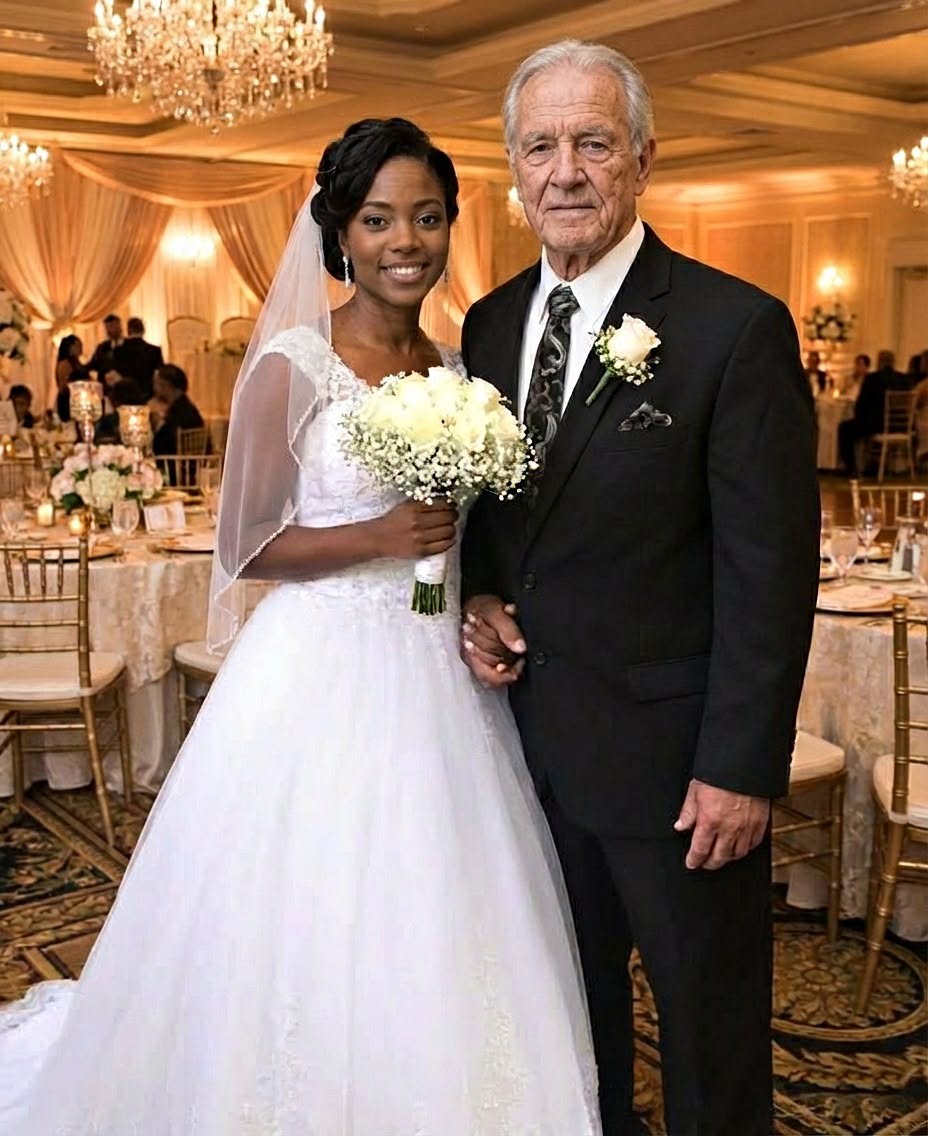
The deal was cold, almost grotesque: her youth for his money, her presence for his protection. Aisha walked into that marriage certain she knew the cost of survival. But the old man’s secret key kept glinting, taunting, promising something darker—or worse, nothing at all. When he finally pressed it into her palm, the door it opened did not lead to gold, or scandal, or the proof of her worst suspicions. It led to a room that shattered her certainty, exposed a love she never consented to, and forced her to confront the one thing she’d spent her life avoiding: the terrifying possibility that she was worth more than a desperate barg……
In the studio’s raw, sunlit quiet, Aisha’s old story of herself began to fracture. She had always been the girl who endured, who calculated, who bartered pieces of her future for a few more breaths for her mother. Yet here she was, immortalized in oil and pigment by a man who had watched the world grow dull and still found something incandescent in her. Each canvas insisted on a version of her that was not pathetic, not transactional, but fiercely alive.
David’s confession didn’t erase the bargain that had brought them together, but it rewrote its meaning. He had not rescued a helpless girl; he had been rescued by the sight of someone who refused to go quietly under. Standing between the portraits, Aisha felt the sharp, unfamiliar ache of being truly seen. The inheritance he offered was no longer just money or property. It was the terrifying freedom to imagine a life not built from fear, but from the unsettling, fragile possibility of being loved on purpose—and of choosing, this time, what to do with that power.