The morning sun cut through the tall windows of Fort Bragg’s administration building like sharpened glass, laying bright rectangles of light across the polished hallway floor. The air-conditioning rattled overhead with the exhausted determination of a system fighting a losing battle against the Carolina heat.
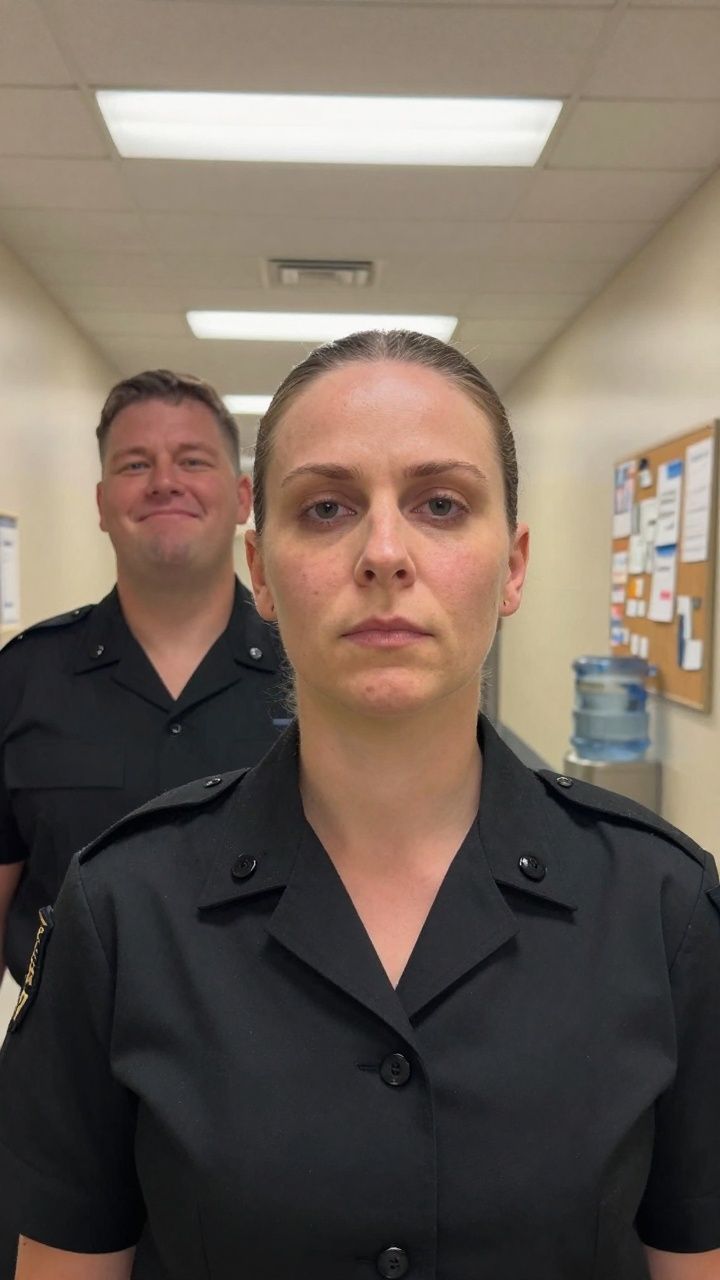
Captain Brenda Holcomb stood at parade rest outside the briefing room, her uniform crisp, her boots a mirror finish. On her left sleeve, just below the shoulder seam, sat a small embroidered patch. Black thread on olive. No flash. No bragging. Just a quiet shape most people would mistake for a unit decoration.
Major Tomlin spotted it the second she walked in.
He was the kind of officer who treated every promotion like a personal favor he’d done the Army. Loud laugh. Louder opinions. The type who measured a soldier by their handshake and their last name.
“Hold up, Captain.” He waved his coffee cup at her sleeve. “What’s that little patch even supposed to mean? Decoration? Did your kid sew that on for you?”
A few junior officers chuckled. The kind of laugh people give when they don’t want to be the next target.
Brenda didn’t move. Didn’t smile. “It’s regulation, sir.”
“Regulation.” He snorted. “Never seen it. Take it off before the colonel gets here Thursday. He’s old school. Doesn’t like cute additions.”
“Yes, sir.”
She didn’t take it off.
For three days, Tomlin made it his personal mission. Comments in the hallway. A “joke” in the mess hall about Girl Scout badges. An email cc’d to half the division asking her to “clarify the origin” of the insignia.
Brenda answered every message the same way. Polite. Brief. The patch stayed.
Thursday morning, 0800. The briefing room filled up. Tomlin sat at the front, legs spread wide, grinning at his own coffee like it had told him a joke.
The door opened.
Colonel Reyes walked in. Forty years of service in every step. The room snapped to attention so fast the chairs squeaked.
“At ease.”
He moved toward the podium, scanning faces. Then he stopped. His eyes had caught on something halfway down the second row.
Brenda’s sleeve.
The colonel went completely still. The kind of still that makes a room hold its breath. He set his folder down on the nearest table without looking at it.
“Captain Holcomb.”
“Sir.”
“Stand up, please.”
She stood.
Colonel Reyes walked the length of the room slowly, the way a man walks when he’s not sure if what he’s seeing is real. He stopped two feet from her and stared at that small black patch like it was a ghost.
Then he turned to face the room. His voice was quiet. Quieter than anyone had ever heard him.
“Only five officers have earned that insignia in the last twenty years.”
Major Tomlin’s grin had frozen halfway up his face.
“Three of them are dead,” the colonel continued. “One is classified. And the fifth is standing in this room.”
He turned back to Brenda. His next sentence dropped the temperature of the entire division by ten degrees.
“Captain, does anyone in this building know what you did in…”
What Nobody in That Room Knew
He stopped himself.
Old habit. Twenty years of compartmentalized briefings and need-to-know conversations had made the colonel careful about what he finished out loud.
He looked at Brenda.
She gave the smallest shake of her head. Almost nothing. The kind of signal you’d only catch if you were watching for it.
“Right,” Reyes said. He turned back to the room. “At ease. Sit down.”
Everyone sat. Tomlin included, though it looked like it cost him something.
The colonel picked his folder back up, found his place, and ran the briefing like normal. Logistics. Deployment rotations. A procurement update that had something to do with vehicles and made two people in the back row visibly age. Standard Thursday morning. Forty minutes, questions at the end, dismissed.
Except it wasn’t standard. Not even close. Every person in that room knew it. You could see them not looking at Brenda’s sleeve, which is the same thing as staring at it.
Tomlin was the only one who kept his eyes forward the entire time. Rigid. Like if he didn’t move, nobody would remember he’d made the Girl Scout joke.
After dismissal, most people filed out fast. Brenda started to follow them.
“Captain Holcomb. A moment.”
She turned back. Reyes was standing by the window, the Carolina sun cutting across his ribbons. He waited until the last junior officer cleared the doorway.
“How long have you been at Bragg?” he asked.
“Four months, sir.”
He nodded like that explained something. “Who processed your orders?”
“Lieutenant Ferris, sir. Out of personnel.”
“And Ferris didn’t flag the insignia?”
“No, sir.” She paused. “I don’t think he knew what it was.”
Reyes made a sound that wasn’t quite a laugh. “Most people don’t.”
The Patch
The insignia had no official name in any document Brenda had ever been handed. The people who gave it to her called it the Quiet Mark. She didn’t know if that was official or just what they said in the room.
It was authorized by a directive she couldn’t quote by number in mixed company. Earned through an operation she couldn’t name in a country she couldn’t mention to most people with clearances.
She’d been a first lieutenant then. Twenty-six years old, fourteen months into her first overseas assignment, attached to a unit whose designation didn’t appear on her service record. The work was not the kind that got written up for commendations. It was the kind that got written up in ways that would never leave a vault in a building outside D.C. with no windows and a parking lot that never quite filled up.
She’d been in a vehicle when everything went wrong. Then she was not in the vehicle. Then she spent eleven days doing things she’d described to exactly two people since, both of them doctors with specific clearances and a legal obligation not to repeat what they heard.
When she came out the other side, a colonel she’d never met before and never saw again sat across from her in a medical facility in Germany and slid a small envelope across a table.
Inside was the patch.
“You don’t have to wear it,” he’d said. “Most people don’t. But you’re authorized.”
She’d worn it every day since.
Four Months of Silence
Fort Bragg was her third posting since Germany. At the first two, nobody had said a word about it. One base in the Pacific where the culture ran quiet and careful. One stint in the Southwest that lasted eight weeks before reassignment. Nobody asked.
Bragg was different. Bigger. Louder. More people with opinions about what a uniform should look like.
Tomlin had been the first one to say anything out loud. But he wasn’t the first one to notice. She’d clocked the looks from her first week. The slight pause when eyes moved from her face to her sleeve. The way people would start to ask and then think better of it.
She’d gotten used to both things. The noticing and the not asking.
What she hadn’t accounted for was Reyes.
She knew his name before she arrived. He had a reputation that moved ahead of him like weather. Thirty-nine years in, one year from retirement, the kind of officer who had been in enough rooms that nothing surprised him anymore.
She’d figured he’d see the patch and file it away quietly. Process it the way experienced people process things they recognize but don’t need to discuss.
She had not figured he’d walk the length of the room like that. Had not figured he’d go that still.
What the Colonel Said Next
They were alone in the briefing room. The AC rattled. Outside, two privates were crossing the parade ground in the heat, moving fast in the way people move when they’re trying to look like they’re not running.
“I knew one of them,” Reyes said. “The ones I mentioned.”
Brenda waited.
“Marcus Webb. We came up together. He was a captain when he earned his.” He looked at the sleeve again, not like he was studying it anymore. More like he was just looking. “He never talked about it either.”
“No, sir.”
“He died in ’09. Kandahar.” Reyes picked up his folder, tucked it under his arm. “I found out about the patch afterward. Reading his file, trying to understand what he’d been doing those last two years. I didn’t know.” He shook his head once. “His wife didn’t know.”
Brenda didn’t say anything.
“I’m not asking you to tell me what it was,” he said. “I know better than that. I just want you to know that I understand what it means. What it cost.” He looked at her directly. “And that in this building, under my command, that patch stays on your sleeve.”
“Thank you, sir.”
He moved toward the door. Stopped.
“Major Tomlin.”
“Sir.”
“He’ll be reassigned to logistics review by end of week. I’d been looking for a reason.” He said it the way you’d say the weather was going to turn. Flat. Already decided. “You didn’t hear that.”
“Hear what, sir.”
He left.
The Hallway After
Brenda stood in the empty briefing room for maybe thirty seconds. The sun had shifted and the rectangles of light on the floor had moved, longer now, reaching toward the far wall.
She picked up her cover from the table where she’d set it, tucked it under her arm.
In the hallway, two captains from the briefing were hanging near the water fountain in the way people hang around when they want to seem like they’re not waiting. She walked past them. One of them, a guy named Garrett she’d played cards with twice, said her name.
She stopped.
“That patch,” he said. He kept his voice low. “I looked it up after you first got here. Couldn’t find anything.”
“You won’t,” she said.
He nodded slowly. The other captain was pretending to check his phone.
“Webb,” Garrett said. “Marcus Webb. My uncle served with him. Talked about him like…” He trailed off. “Never mind.”
“He was good,” Brenda said. Because she’d known Webb too, briefly, in the way you know people when you’re all working in the same shadows. “Real good.”
Garrett nodded again.
She walked on.
Thursday Afternoon
By 1400, Tomlin had stopped making eye contact in the hallway. By 1600, word had apparently moved through the building the way word always moves through buildings, which is to say instantly and without any identifiable source, that the major was being reassigned.
Nobody connected it to Brenda out loud.
She ate dinner in the mess hall, read a book she’d been working through for three weeks, went back to her quarters, and set her uniform out for the next morning. The patch sat right where it always sat. Black thread on olive. Quiet shape.
She turned the light off at 2130.
Outside, the Carolina heat had finally backed off a degree or two, the way it does sometimes in the evening when the day decides it’s made its point. Through the window, the parade ground was empty and lit by the kind of flat institutional light that makes everything look the same color.
She was asleep in four minutes.
The patch stayed on the sleeve where it had always been, where it would stay, not because anyone told her to wear it and not because she needed anyone to know what it meant.
Because Marcus Webb didn’t get to wear his anymore.
—
If this one stayed with you, pass it on to someone who’d get it.