The knock on my door sounded like an arrest.
My kids were still sleeping. My heart wasn’t.
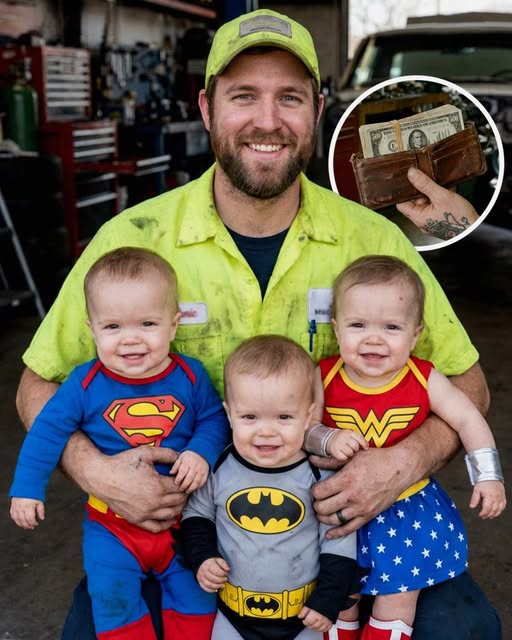
I thought returning that wallet had ruined us.
A sheriff stood on my porch, his shadow filling the doorway, his voice flat, unreadable. He said my name, asked about the money, and then called into his radio:
The officers didn’t bring handcuffs. They brought boxes—heavy, overflowing pieces of grace that landed one by one in my tired living room. Coats thick enough to laugh at winter. Boots that wouldn’t split at the seams. Groceries that looked like they belonged in someone else’s kitchen. Gas cards and gift cards, the kind of small plastic rectangles that mean survival when your bank account is a joke. As my mother lifted a pink coat with trembling hands, the sheriff quietly explained that the old man from the wallet was his father—and that he hadn’t slept until he found the “honest mechanic in the yellow house.”
I cried in front of strangers in uniform, the weight of years of barely-getting-by finally cracking. Later, standing on Gary’s porch, I thanked him, but he shook his head. He said I’d reminded him the world still had men who did the right thing when no one was watching. Driving home to my triplets, I realized the truth: the money in that wallet could have paid our bills, but it was my choice to give it back that changed our lives. Integrity hadn’t just cost me; it had carried me—straight through fear, past scarcity, into a moment where the world, for once, chose to be kind.